2
Airlines
7×
Per week
₱11.0k
From (est.)
4h
Nonstop
Lapu-Lapu (Mactan), Cebu (CEB) → Fukuoka (FUK)
Lapu-Lapu (Mactan), Cebu
DISTANCE
2 885 km
Fukuoka
Fukuoka Airport
Flight time is an estimate: great-circle distance with ~8% routing adjustment and ~45 min ground operations. Actual block time depends on the carrier, winds, and specific service (check the airline schedule).
🇯🇵
FUK · East Asia
- Country
- Japan
- Capital
- Tokyo
- Currency
- JPY
- Visa for PH
- Visa required (apply via embassy/VFS)
- OFW relevance
- Medium — mixed OFW + tourism
Compare carriers on this route
🇵🇭Philippine Airlines
PR
- Frequency
- 7× / week
- Baggage
- 23kg +10
- Migrant program
- ✓
🇵🇭Cebu Pacific
5J
- Frequency
- 7× / week
- Baggage
- LCC (paid)
- Migrant program
- ✓
Flights Cebu (CEB) → Fukuoka (FUK)
7 one-way departures a week are catalogued on CEB–FUK, flown by Philippine Airlines and Cebu Pacific, with a scheduled block of 4.0 hours. 7 one-way departures a week are catalogued on the pair across 2 carriers on file.
This corridor carries a demand score of 5/10 in our route file and is flagged as a leisure, VFR and business corridor. Read that number for what it is: an editorial 1-10 ranking of estimated Filipino-language search interest, built for prioritising which pages we research first. It is not a passenger count, not a load factor, and not a quality signal about the airlines involved. High-scoring corridors are the ones where seats on the cheapest fare classes disappear first and where the gap between an early booking and a two-week-out booking is widest; low-scoring corridors tend to hold their price longer but give you fewer departures to choose from if a plan slips.
Cebu to Fukuoka connects the Visayas hub with the main city of southern Japan, with around 7 flights a week, one a day. The route carries leisure travellers in both directions — Japanese visitors heading for Cebu’s beaches and Filipino holidaymakers bound for Kyushu. Block time is about four hours, an easy single sector.
Airlines on this route
2 carriers — Philippine Airlines and Cebu Pacific — are catalogued nonstop on CEB–FUK, filing about 7 one-way departures a week. Base economy checked baggage runs 0–23 kg across them. 5 out of 10 is the demand score this site assigns the corridor editorially.
What each operator brings to this pair, from our carrier file:
- Philippine Airlines (PR) — alliance none (ex-oneworld observer); hubs MNL/CEB; 23 kg economy checked; +10 kg OFW uplift; PH brand strength 10/10.
- Cebu Pacific (5J) — no global alliance; hubs MNL/CEB/CRK/DVO/ILO; 0 kg economy checked; PH brand strength 10/10. Cebu Pacific sit outside a global alliance, which matters at exactly one moment: a disruption. An alliance partner can usually be rebooked onto without a new ticket, an unaligned carrier needs an interline agreement to do the same thing, and if neither exists you are buying a fresh seat at walk-up price.
Two carriers fly Cebu to Fukuoka: Philippine Airlines and Cebu Pacific. Philippine Airlines is full-service with a checked allowance included; Cebu Pacific flies it low-cost, with a lean base fare to which baggage is added. The pairing gives travellers a clear choice between a full ticket and a budget one.
PHP fares
0 live fare readings are cached for CEB–FUK right now, so the figures below describe how pricing behaves on the corridor rather than a current quote; the scheduled block is 4.0 hours. 7 one-way departures a week are catalogued on the pair across 2 carriers on file.
Delays and cancellations: what actually applies on CEB–FUK
2 rulebooks cover CEB–FUK from the Philippine side: the Civil Aeronautics Board’s Air Passenger Bill of Rights, which governs the departure from a Philippine airport, and the Montreal Convention 1999, which caps liability for delay and baggage. Japan may operate its own scheme for departures from its airports; this page does not track it.
None of the statutory compensation schemes this site sources — EU261, UK261, the Saudi GACA regulation, Canada’s APPR and the US DOT consumer rules — reaches CEB–FUK. Read that as a statement about our source list, not as a finding that Japan has no rules of its own: states routinely regulate departures from their own airports, and the civil aviation authority of Japan is the body to check before you conclude that nothing applies. What definitely does apply in both directions is the Montreal Convention 1999, which caps a carrier’s liability for delay and for baggage that is damaged, delayed or lost. Montreal reimburses proven loss up to a cap; it pays no fixed sum for the inconvenience itself, so keep receipts rather than counting hours.
On the Manila end, a flight departing a Philippine airport is covered by the Air Passenger Bill of Rights administered by the Civil Aeronautics Board, which obliges the carrier to offer rebooking or a refund and to provide amenities as a delay lengthens. It is a service and refund standard rather than a compensation tariff, so the outcome is rebooking, a refund and amenities rather than a set payment.
Fares are quoted in PHP and move with the Japanese travel calendar. The cherry-blossom spring, the summer holidays and the year-end are the busiest and most expensive — for those dates, booking two to three months ahead is sensible. For quieter weeks, four to six weeks usually secures a reasonable economy fare, with the low-cost option cheapest for light packers.
About Fukuoka
1 arrival airport serves this route: Fukuoka Airport (FUK), at Fukuoka, Japan. Local currency is JPY. 7 one-way departures a week are catalogued on the pair across 2 carriers on file. 5 out of 10 is the demand score this site assigns the corridor editorially.
On arrival you are landing at Fukuoka Airport, ICAO RJFF, serving Fukuoka, Japan. Kyushu gateway. Across the whole Philippine market, Philippine Airlines and Cebu Pacific are the carriers our destination file records as serving Fukuoka from home — a wider set than the ones flying this particular pair, which is why a Manila routing sometimes opens options Cebu does not have. A planning point that costs people money: an airport code is not a city. Where a city has more than one airport, the low fare is often into the outlying field, and the road time and taxi fare can wipe out the difference. Check which airport your fare actually lands at before you compare two prices, and if you are connecting onward from a different airport in the same city, treat that as a separate journey with its own buffer — no airline protects a connection that involves a taxi.
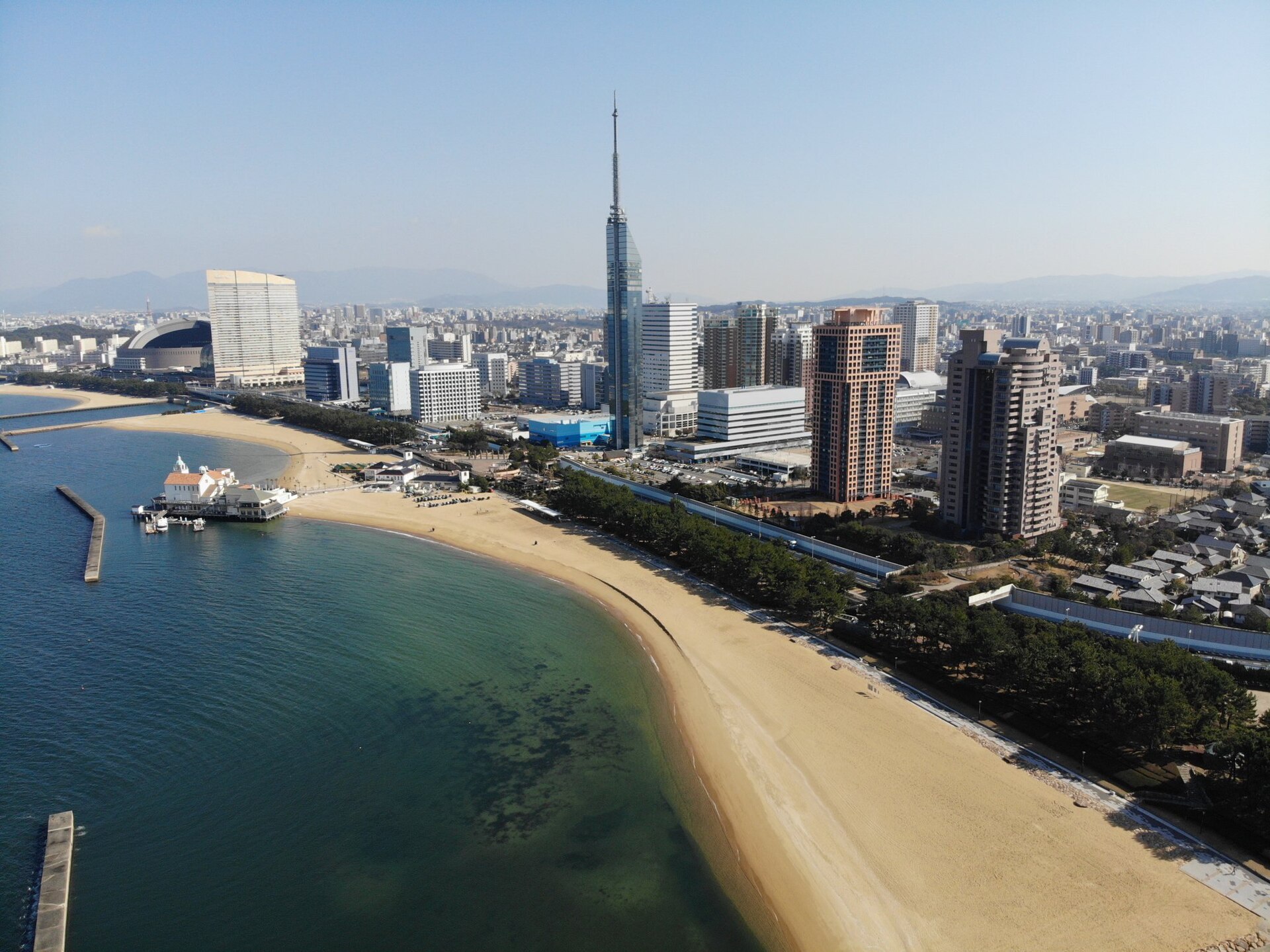
Fukuoka is the largest city on the Japanese island of Kyushu, a port city known for its food culture, its relaxed pace and its position as a gateway to the hot springs and volcanoes of southern Japan. For travellers from Cebu it is a leisure destination with an easy, direct connection.
Entry rules for a Philippine passport in Japan
1 rule governs entry here for a Philippine passport: Tourist visa required (waiver in negotiation but not active as of May 2026), at Free (consular fee waived), for a maximum stay of 15 days (tourist), 30 days (visiting relatives). Verified 2026-05-18.
- Japan — Tourist visa required (waiver in negotiation but not active as of May 2026); fee Free (consular fee waived); max stay 15 days (tourist), 30 days (visiting relatives). Apply via accredited travel agency in PH (NOT directly at consulate). Allow 7 working days processing. Official source
Two things this table does not cover, and they are the ones that strand people. A visa grants permission to apply for entry — the officer at the border still decides, and a return or onward ticket plus proof of funds is what that decision usually turns on. And a visa for your destination says nothing about the countries you transit: several major hubs require their own transit visa or a same-terminal, same-ticket connection to be exempt, and the exemption is lost the moment you have to collect a bag and check in again. Visa rules change frequently. Use this as a starting reference only; verify with the destination’s embassy or official immigration portal before booking. For OFW employment visas, follow the DMW deployment process — that is separate from tourist/visit visas.
FAQ
6 questions below are answered from the route, carrier and fare records this site holds for CEB–FUK. Anything that is a cached floor rather than a bookable price says so, and rules that fail in specific situations are answered with those situations named.
Checked baggage and the OFW uplift on CEB–FUK
10 kg is the largest OFW uplift on this route, carried by Philippine Airlines on top of a 23 kg economy base — 33 kg in total for a qualifying passenger.
Checked allowance on this pair, from our carrier file:
- Philippine Airlines — 23 kg economy base, +10 kg under Overseas Filipino Bayani Program (extra baggage 10kg + handling) = 33 kg for a qualifying worker.
- Cebu Pacific — 0 kg economy base, no OFW uplift recorded in our carrier file.
The uplift is the part people get wrong, so here is where it does not reach. It belongs to the passenger through a programme rather than to the ticket, and it is released at the counter against documents — an OEC or OFW Pass and, usually, the employment contract. Book a bags-free base fare on a low-cost carrier and there is no base allowance for the uplift to sit on top of. Book the domestic feeder as a separate ticket and the uplift does not follow the bag onto it. Fly a segment operated by a partner airline under a codeshare and the operating carrier’s own rules apply, not the one whose code is on your ticket. And the allowance is per passenger, not per booking — you cannot pool it across a family unless the airline’s own pooling rule says so. Verify the number at booking; excess bought at the airport is priced per kilo and is the most expensive kilo you will ever buy.
Does the OFW baggage uplift apply to every fare on CEB–FUK? No. The largest uplift on this route is 10 kg with Philippine Airlines, granted at check-in against an OEC or OFW Pass. It does not apply to a bags-free base fare, to a separately ticketed domestic feeder, or to a codeshare segment operated by a partner under its own rules, and it is per passenger rather than per booking.
Can I claim delay compensation on CEB–FUK? Not under any scheme this site sources. The fallback is the carrier’s conditions of carriage plus Montreal Convention 1999 liability limits, and Japan’s own civil aviation authority is worth checking for departures from its airports. Separately, a departure from a Philippine airport is covered by the Civil Aeronautics Board’s Air Passenger Bill of Rights, which mandates rebooking, refunds and amenities but sets no fixed cash scale.
Which airlines fly from Cebu to Fukuoka? Philippine Airlines and Cebu Pacific fly Cebu to Fukuoka, with around 7 departures a week.
How long is the flight from Cebu to Fukuoka? Nonstop block time is about 4.0 hours.
When are Cebu to Fukuoka fares cheapest? Fares on CEB-FUK are quoted in PHP and move with demand. They climb around the December holidays and Holy Week. Booking four to eight weeks ahead usually secures a reasonable economy fare.
Are there nonstop flights from Cebu to Fukuoka? Yes — Cebu to Fukuoka is flown nonstop. Booking early still helps, as seats on the cheapest fare classes sell first.
Search live fares
Search CEB → FUK on Aviasales →
Related
Where to stay · Fukuoka
Hotels in Fukuoka — peso budget
Budget
Hostels & 2-3★
₱1.5–3k / night
Mid-range
3-4★ comfort
₱3–7k / night
Luxury
5★ & resorts
₱7k+ / night
Hotellook compares 70+ booking sites incl. Booking.com, Agoda, Trip.com — booking earns us a small commission, kabayan.
All hotels in Fukuoka